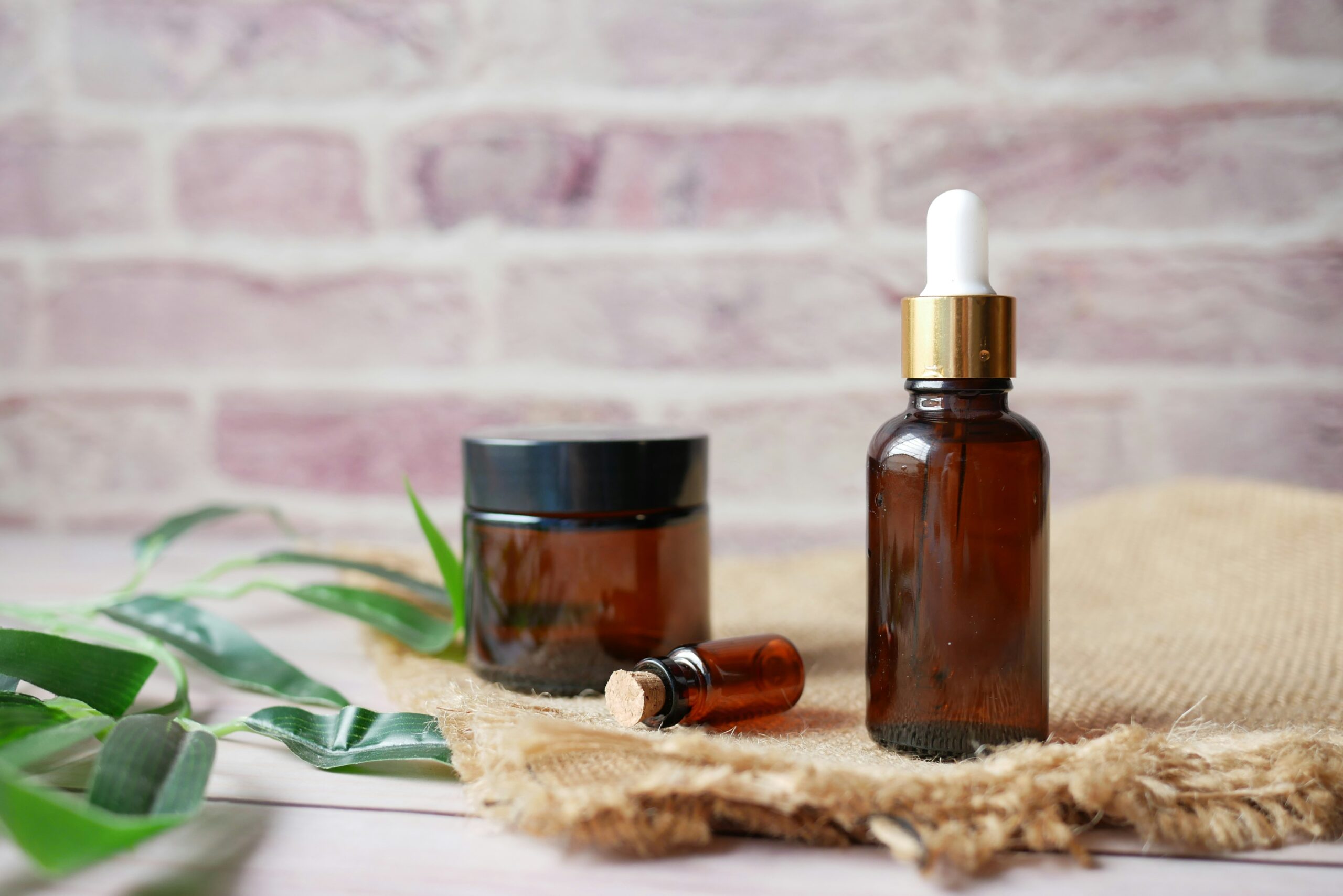
Before the wellness trends. Before the influencers with their glass jars of coconut oil. Before the seventeen identical articles you’ve already read — there was a god.
His name was Dhanvantari. And he didn’t arrive quietly.
According to Vedic tradition, the gods and demons once churned the great cosmic ocean itself — the Samudra Manthan — in pursuit of the nectar of immortality. They used a mountain as a churning rod and a cosmic serpent as a rope. The ocean roiled for a thousand years.
And from those depths, Dhanvantari emerged.
Avatar of Vishnu. Divine physician. Keeper of Ayurveda — the science of life itself. He rose from the primordial waters carrying a pot of amrita — the nectar that confers immortality — and with him came the entire system of ancient Indian medicine. Every herb. Every practice. Every daily ritual designed to keep the body vital and the spirit aligned.
Including what you now call oil pulling.
This practice didn’t begin in a wellness blog. It began with a god who came from the deep carrying immortality in his hands. That matters. Not as mythology to be admired from a distance — but as context for understanding why something three thousand years old is still worth doing every morning before breakfast.
The ancients weren’t guessing. They were building a sadhana — a daily mindful spiritual practice, a living discipline woven into the fabric of ordinary life. This was one thread of it.
So was I going to write the same article you’ve already read?
No. I wrote the one I always wished I could find.
What The Ancient Texts Actually Say
The practice wasn’t called “oil pulling” in ancient India. That name is modern — popularized in the West by a Ukrainian physician named Dr. F. Karach in the 1990s. He named it for the mechanism. The oil literally pulls toxins, bacteria and debris out of the mouth by binding to them as you swish. Fat attracts fat. Bacterial membranes are lipid-based. The oil collects them and when you spit — they leave with it.
The ancient Sanskrit texts had two distinct practices with two distinct names.
Gandusha — filling the mouth completely with oil and holding it still. No swishing. A medicinal bath for the oral cavity. Stillness as medicine.
Kavala — actively swishing a smaller amount through the teeth and gums. This is closer to what most people practice today.
These were not interchangeable. They were calibrated practices prescribed for different constitutional types — different doshas — with different oils. Sesame for Vata types. Coconut for Pitta. Sunflower for Kapha.
The Charaka Samhita — one of the foundational Ayurvedic texts dating to before the 2nd century — described these practices in detail. It said they would strengthen the jaws, deepen the voice, improve the health of the face and oral tissues.
The Vedic sages weren’t just recommending a dental hygiene routine. They were prescribing a constitutional practice calibrated to individual biology.
Personalized medicine. Three thousand years ago.
What’s Actually Happening In Your Mouth
Your mouth is not just teeth and gums. It is a dense network of lymphatic vessels.
The floor of your mouth, your tongue, your cheeks, your gums — all permeated by lymphatic capillaries that drain into the submandibular and cervical lymph nodes. There are no areas in the oral cavity without lymphatics. The simple mechanical action of swishing oil stimulates this entire network.
And here is where castor oil enters the conversation.
Most oil pulling articles recommend sesame or coconut oil. Both are legitimate. Both have antimicrobial properties. Both work.
But castor oil is different in one specific and scientifically documented way.
Approximately 90% of castor oil’s fatty acid content is ricinoleic acid — a compound found in no other substance on earth. Research has shown that ricinoleic acid increases lymphocyte count, stimulates lymphatic drainage, and speeds the removal of cellular toxins. It penetrates external skin — one of the body’s toughest barriers — to a depth sufficient to reach the dermal layer and exert anti-inflammatory effects on the tissues beneath.
Now consider the oral mucosa.
The lining of your mouth has no stratum corneum — the tough outer layer that slows absorption through skin. It is specifically designed for rapid absorption. It is why nitroglycerin is placed under the tongue in a cardiac emergency. Fast. Direct. No barrier.
If ricinoleic acid penetrates the tougher barrier of external skin and stimulates lymphatic activity there — it suggests it would have at least equal effect on the thinner, more permeable tissues of the mouth, sitting directly over a rich lymphatic network.
No direct clinical study exists on castor oil pulling specifically. What we have is established science on two sides of a logical equation — ricinoleic acid’s documented lymphatic effects, and the mouth’s documented lymphatic anatomy. The conclusion is reasonable inference, not proven fact.
That’s often where ancient wisdom and modern science meet. Not always in a clinical trial. Sometimes in a question worth asking.
Why This Castor Oil is Awesome
My husband went down a research rabbit hole so I didn’t have to.
What he discovered was this — most commercial castor oil is extracted using hexane, a chemical solvent. It leaves residue. It damages the beneficial compounds in the oil. If you are swishing something through the delicate tissues of your mouth specifically to support detoxification, using hexane-extracted oil rather defeats the purpose. This was deeply frustrating for him so he kept digging.
Finally, he found Heritage Store Organic Castor Oil. Cold-pressed. Hexane-free. USDA certified organic. One single ingredient. Bottled in dark glass to preserve the oil’s potency. Nothing added. Nothing compromised.
That’s the one we use. It’s served us very well.
About The Taste
Castor oil has a thick, earthy flavor. Not offensive — but not subtle either. If you find it challenging, add one or two drops of food-grade essential oil before swishing.
Peppermint is classic — freshening and familiar.
Clove adds its own antimicrobial properties and has been used in oral care traditions for centuries.
Frankincense is deeply ancient, antimicrobial, and brings a sacred quality to the practice that feels appropriate given where it comes from.
Make sure whatever you add is explicitly food-grade. It’s going in your mouth.
Before You Begin — Read This
Castor oil is a laxative. A real one. Even small amounts absorbed through oral tissue may have digestive effects in sensitive people. The research on exactly how much it takes is limited — your body may have opinions before the science catches up.
So the first time you try this — do it at home. Not at work. Not before a first date. Not before anything where a sudden bathroom emergency would be catastrophic. Give yourself a quiet Saturday morning and see how your body responds before committing to a pre-meeting routine.
Start with five minutes. Work up to twenty.
And this applies to everything — not just castor oil. Any new substance going in or on your body deserves a test run first. Your mouth is sensitive tissue. Respect it.
This article is for informational purposes only and is not medical advice. Consult a healthcare provider before starting any new health practice.
How To Practice
One tablespoon of Heritage Store Organic Castor Oil. One or two drops of food-grade essential oil if desired. Swish gently on an empty stomach — five minutes to start, working toward twenty. Spit into the trash, not the sink. Rinse with warm water. Brush as normal.
Personally, I’ve habit-stacked my oil pulling practice into my sauna sessions and now I never miss a swish sesh! If you want to understand why that works so well, this habit stacking article explains the mechanics behind it.
This is your sadhana. Not a trend. Not a hack. A daily practice rooted in three thousand years of understanding that the mouth is a gateway — and what you do with it every morning matters.
Dhanvantari rose from the cosmic ocean carrying immortality.
You’re swishing some oil before breakfast.
But you are also participating in something ancient, intentional, and alive.
Tend the garden.

No responses yet